
One-Piece Metal Forming
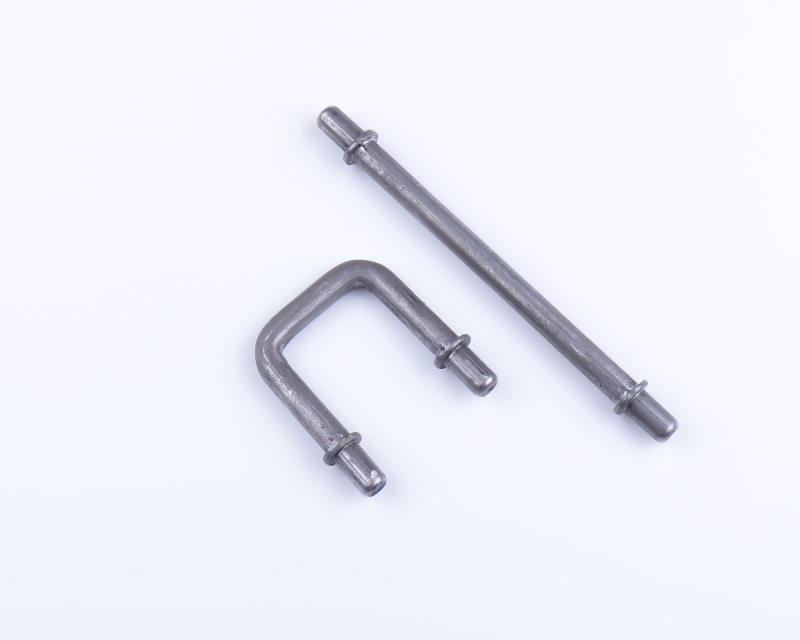 Straight and U-shaped metal rods with integrally formed collars
One-piece metal forming by Pi Chan Metal. These straight and U-shaped rods feature collars formed directly from the rod material, without welding on separate rings.
One-Piece Metal Forming for Custom Rod Components
One-piece metal forming shapes features directly into a metal workpiece so they remain part of the same continuous component. For a rod with an integral collar, the raised feature comes from the rod material itself rather than a separately attached ring.
Pi Chan Metal Co., Ltd., based in Changhua, Taiwan, offers forming capabilities for drawing-specific metal rod components. Our product examples include straight and U-shaped rods with integrally formed collars.
This approach is worth evaluating when a design requires a fixed raised feature along a rod and the buyer wants to explore an alternative to a separately assembled collar.
Submit your drawing to discuss the complete geometry, material, tolerances, and manufacturing feasibility.
What One-Piece Metal Forming Means at Pi Chan
“One-piece” describes the relationship between the formed feature and the parent workpiece. In Pi Chan’s integral collar construction, the collar and rod are continuous material.
Localized compression forms the raised collar directly from the rod. A separate ring is not welded or fitted onto the shank to create that feature.
One-piece construction does not necessarily mean the complete part is made in one machine stroke. Several forming or finishing operations may be needed to achieve the approved design.
| Term | Meaning | What It Does Not Establish |
|---|---|---|
| One-piece construction | Features belong to one continuous component | A single production operation |
| Integral collar | Raised collar formed from the rod itself | An adjustable separate ring |
| Metal forming | Material is shaped through deformation | A guarantee that no finishing is needed |
| Drawing-specific component | Geometry follows agreed requirements | Unlimited design feasibility |
For a closer explanation of the collar-forming capability, visit integral collar forming at Pi Chan Metal.
Straight and U-Shaped Rods with Integral Features
Pi Chan’s illustrated examples show straight and U-shaped metal rods with raised collars near their ends. These configurations demonstrate how a rod body and its collar features can form a single component.
The appropriate shape depends on the mating parts, installation sequence, available space, and intended function.
| Configuration | Features to Define | Assembly Considerations |
|---|---|---|
| Straight rod | Length, diameter, collar positions, and ends | Alignment and axial clearance |
| U-shaped rod | Bend geometry, leg spacing, leg lengths, and collars | Fit around or between mating components |
| Rod with a raised collar | Collar diameter, thickness, and location | Contact, positioning, and seating |
| Rod with additional end features | Complete end geometry and orientation | Connection requirements |
These examples provide a starting point for inquiry. Each combination of dimensions, material, bends, and integral features requires review.
Evaluate Whether Separate Features Can Be Integrated
A design that uses a rod and a separate ring may be a candidate for an integral collar. The review should begin with what the separate ring does.
For example, a removable or adjustable collar serves a different purpose from a fixed raised stop. Replacing it with a formed feature can change how the assembly is installed, serviced, or adjusted.
| Existing Requirement | Question to Ask Before Integration |
|---|---|
| Fixed axial stop | Can an integral feature provide the required position and contact? |
| Adjustable collar | Is adjustment required during installation or service? |
| Replaceable ring | Must the ring be removed or replaced independently? |
| Assembly access | Can mating parts still be installed around a fixed collar? |
| Controlled spacing | Which dimensions establish the required distance? |
| Functional loading | What forces act on the collar and rod? |
A one-piece option should be compared against the complete requirements, not approved solely because it resembles the original assembly.
One-Piece Forming Compared with Other Construction Methods
Metal components can be produced through different manufacturing routes. One-piece forming, separate-part assembly, welding, and machining each require a design-specific assessment.
| Manufacturing Approach | Basic Construction | Review Point |
|---|---|---|
| One-piece forming | Material is shaped into an integral feature | Formability, geometry, and tolerances |
| Separate-part assembly | Additional components are attached | Fit, retention, and assembly requirements |
| Welded construction | Components are joined by welding | Joint design and welding requirements |
| Machining from larger stock | Material is removed to leave the required profile | Stock size and machining requirements |
For Pi Chan’s integral collar feature, forming removes the need to attach a separate ring. Any wider claims about cost, strength, material savings, or service life require evidence for the particular design.
Design Information Needed for a Forming Review
Provide a drawing of the finished component, including all bends, collars, ends, and threaded sections.
Identify the surfaces that locate or contact other components. This helps distinguish functional dimensions from features that permit greater variation.
| Drawing Detail | Information to Include |
|---|---|
| Overall geometry | Finished dimensions and units |
| Rod diameter | Diameter of each relevant section |
| Integral collars | Outside diameter, thickness, profile, and position |
| Bends | Required radii, angles, spacing, and orientation |
| End features | Shape, dimensions, and relationship to the body |
| Threads | Designation, coverage, and location, if required |
| Geometric requirements | Straightness, alignment, or other critical controls |
| Drawing reference | Part number and revision |
Where possible, include an assembly view. A part drawing explains its shape, while an assembly view helps explain why particular dimensions matter.
For components combining forming and fastening features, explore special screw manufacturing.
Material and Finish Must Suit the Complete Part
Material selection affects forming feasibility as well as finished-part performance. Specify the required grade and mechanical properties rather than using only a broad description such as “metal rod.”
Also describe the environment and any contact with other materials. Surface treatment should be specified separately from the base material.
| Requirement | Details to Provide |
|---|---|
| Material | Grade or applicable specification |
| Mechanical properties | Required strength, hardness, or other properties |
| Exposure | Moisture, temperature, chemicals, or outdoor conditions |
| Finish | Required coating or surface treatment |
| Contact materials | Materials touching the finished component |
| Surface quality | Functional and appearance requirements |
| Verification | Required documentation or testing |
Not every material can achieve the same formed geometry. Material, dimensions, and tolerances must be reviewed together before availability is confirmed.
Tolerances, Samples, and Functional Evaluation
Tolerance requirements should reflect the role of the component. A collar used for positioning may need control of its axial location, while a U-shaped rod may depend on leg spacing and alignment.
Agree on the measurement references and acceptance criteria before sample evaluation.
| Feature | Possible Inspection Requirement |
|---|---|
| Rod body | Diameter, length, and straightness |
| Integral collar | Diameter, thickness, position, and profile |
| U-shaped section | Leg spacing, bend geometry, and alignment |
| End features | Dimensions and orientation |
| Threads | Required specification and inspection method |
| Surface | Agreed finish and defect limits |
| Assembly fit | Clearance, seating, and installation checks |
If samples are supplied, evaluate them with representative mating components. Record the approved drawing revision and relevant results.
Sampling, inspection, testing, and documentation arrangements must be confirmed for the specific project.
Long Rods and Additional Formed Features
Long components may require particular attention to straightness, handling, packaging, and assembly access.
If a design combines extended length with a collar, bend, or threaded section, submit all features together. Feasibility should be assessed for the complete part rather than each feature in isolation.
Pi Chan’s extra long screws category provides a related starting point for extended-reach inquiries. Confirm the required combination of length, diameter, material, and formed features.
Request a One-Piece Metal Forming Review
Send Pi Chan your drawing and explain the function of the part. If the project replaces a multi-part assembly, include the current arrangement and the requirements the replacement must retain.
| Inquiry Item | Information to Include |
|---|---|
| Drawing | Dimensions, units, tolerances, and revision |
| Application | Component function and mating-part details |
| Integral features | Collar geometry and position |
| Additional geometry | Bends, ends, threads, or other requirements |
| Material and finish | Required grade, properties, and treatment |
| Quantity | Initial order and estimated repeat demand |
| Approval | Sample, inspection, and documentation requirements |
| Delivery | Destination and requested date |
Contact Pi Chan Metal to discuss manufacturing feasibility, tooling requirements, minimum order quantity, pricing, and delivery arrangements.
One-Piece Metal Forming FAQ
What Is One-Piece Metal Forming?
It describes shaping features into a metal workpiece so they remain part of one continuous component. For Pi Chan’s integral collar rods, the raised collars are formed from the rod material rather than attached as separate rings.
Does One-Piece Mean the Part Is Made in One Operation?
No. One-piece describes the finished construction. The complete component may require several forming, bending, threading, or finishing operations, depending on the approved design.
How Is an Integral Collar Different from an Attached Ring?
An integral collar belongs to the rod material itself. An attached ring is a separate component secured to the rod. The constructions can differ in assembly sequence, adjustment, retention, and service requirements.
Is Welding Used to Attach the Collar?
For Pi Chan’s integral collar feature, no separate ring is welded onto the rod. The raised section is formed directly from the parent material.
Can One-Piece Forming Replace Every Welded Component?
No. Suitability depends on geometry, material, function, and manufacturing constraints. An existing welded or assembled design must be reviewed before a formed alternative can be proposed and approved.
Can Straight and U-Shaped Rods Have Integral Collars?
Pi Chan’s product examples include both configurations. Submit the required dimensions and material for review. The examples do not establish that every bend, diameter, or collar combination is feasible.
Can a Collar Be Formed Away from the Rod End?
Pi Chan’s described capability includes raised features along the rod body. Specify the required location and surrounding geometry so the complete design can be assessed.
Can the Collar Be Adjusted After Manufacturing?
An integral collar is a fixed feature. If the assembly needs an adjustable position, that requirement should be identified before selecting one-piece construction.
Does One-Piece Construction Guarantee Greater Strength?
No universal strength improvement can be assumed. Performance depends on material, geometry, processing, and loading. Any comparison should use evidence for the actual designs being considered.
Does Forming Eliminate All Machining?
Not necessarily. The finished component may need additional operations to meet its drawing. Discuss the complete specification rather than assuming that a formed part requires no further processing.
What Materials Are Suitable?
Specify the required material grade for review. Suitability depends on formability, geometry, and finished-part requirements. A process that works for one material may not produce the same result in another.
Can Threads Be Combined with Formed Features?
Show the thread designation, length, and location on the complete drawing. The combination of threads, collars, bends, and material must be reviewed before feasibility is confirmed.
What Information Is Needed Without an Existing Drawing?
Provide sample information, measured dimensions, photographs, and an explanation of the function. These can help define the request, but a controlled specification should be agreed before production.
Are Samples Available Before Production?
Ask about sample availability, cost, and lead time during quotation. If samples are supplied, agree on dimensional and functional acceptance criteria before approval.
What Determines Price and Lead Time?
Geometry, material, tooling, tolerances, finish, quantity, inspection requirements, and the production schedule all affect the quotation. Provide the delivery destination and required date with your inquiry.